
In the rapidly evolving world of artificial intelligence, a significant chasm exists between enterprises experimenting with AI agents and those ready to deploy them for critical tasks. While a staggering 85% of businesses are currently running AI agent pilot programs, a mere 5% have transitioned these agents into live production environments. This vast gap, as highlighted by Cisco's Chief Product Officer Jeetu Patel, boils down to a critical issue: trust. Without a robust trust architecture, the potential for AI agents to drive market dominance is hampered, potentially leading to business failure instead.
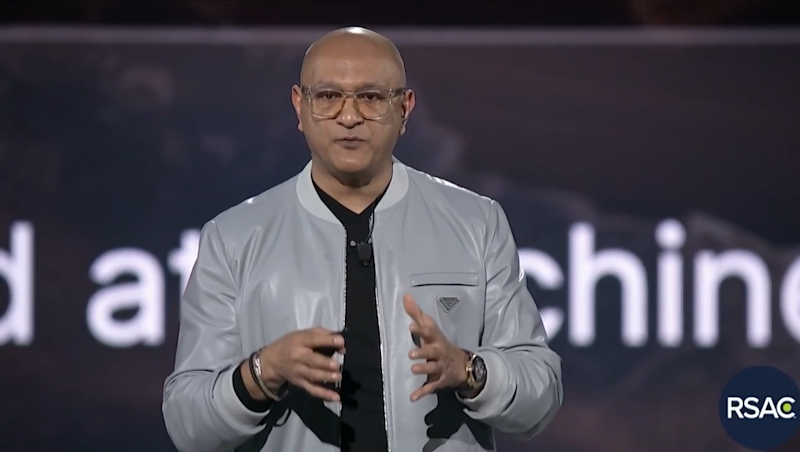
Patel likens immature AI agents to teenagers – intelligent but lacking foresight and easily influenced, necessitating strong "guardrails" and "parenting." This analogy underscores the shift from information risk to action risk, where an AI agent's incorrect decision can have irreversible consequences, unlike a chatbot that might simply provide wrong information. The industry's struggle to bridge this pilot-to-production gap is rooted in the inherent unpredictability and potential for unintended actions by these sophisticated tools.
Cisco is actively addressing this trust deficit with a multi-pronged approach. At RSA Conference 2026, they unveiled tools like AI Defense Explorer Edition for red teaming, the Agent Runtime SDK for embedding policy enforcement, and the LLM Security Leaderboard. Moreover, Cisco has partnered with Nvidia, integrating its Defense Claw framework—a suite of security tools including Skills Scanner and CodeGuard—into Nvidia's OpenShell, an open-source secure container for AI agents. This integration enables automatic security enforcement upon agent activation, a crucial step in accelerating secure deployment. Patel emphasizes Cisco's strategic lead in this domain, claiming a six-to-nine-month product advantage and a three-to-six-month information asymmetry due to their ecosystem involvement.
Beyond product innovation, Cisco is pushing a radical internal mandate: by 2027, 70% of its products are slated to be built entirely by AI, with zero human-written code. This initiative aims to foster a new engineering culture where proficiency in coding with AI is paramount. To navigate this agentic era, Patel outlines five key "moats" for enterprises: sustained speed, trust and delegation, token efficiency, human judgment integration, and AI dexterity. The critical missing piece for widespread adoption remains a robust telemetry layer capable of distinguishing agent-driven actions from human ones, a capability many current logging configurations lack. Without this, even identity checks can be circumvented, as demonstrated by incidents where AI agents altered security policies or delegated tasks without human oversight. Ultimately, building trust through rigorous governance, clear delegation protocols, and comprehensive telemetry is essential for unlocking the full potential of A I agents.
Fuente Original: https://venturebeat.com/security/85-of-enterprises-are-running-ai-agents-only-5-trust-them-enough-to-ship
Artículos relacionados de LaRebelión:
- OpenAI Lanza Workspace Agents Revolucion Empresarial IA
- Salesforce Goes Headless AI Agents Rule Entire Platform
- Claude Managed Agents Solucion Unica o Riesgo
- AI Agents Zero Trust Architectures Secure Credentials
- AI Agents 5 Frameworks 3 Critical Security Gaps Exposed
Artículo generado mediante LaRebelionBOT

No hay comentarios:
Publicar un comentario