Between September 2025 and February 2026, the electric car and the energy system behind it moved in opposite directions at once. Several Western carmakers pulled back toward hybrids, data centres strained the grid, nuclear power returned to the debate and renewables set records, while climate policy in the United States and Canada loosened.
 Signed by Byline, Chief editor · English editionUpdated on
 What happened and when
The US relaunches its nuclear push
A series of executive orders aims to speed up approvals and reach 400 gigawatts of nuclear power by 2050, although costs and construction times remain the main obstacle.
Cold weather cuts battery range
A report describes losses of up to 60% of charge overnight in Kashmir and Chinese drivers who use an EV only as a second car in winter.
Norway declares its goal met
The government says all new car sales are electric and proposes gradually withdrawing the VAT exemption, which is still subject to approval.
Natrium clears its environmental review
The US nuclear regulator completes the environmental assessment of TerraPower's reactor, rated at 840 MW thermal with molten-salt storage.
Data centres push up electricity prices
In Virginia, Illinois and Ohio bills rose more than the national average, which was 6% year on year in August.
Wind record in the United Kingdom
Wind generation reached 22,711 MW, enough to supply about 22 million homes.
Canada loosens climate rules
A pact with Alberta drops the oil and gas emissions cap and the clean-electricity rules in exchange for stronger industrial carbon pricing.
Ford parks the F-150 Lightning
Ford redirects its investment to hybrids, extended-range EVs and battery storage for data centres.
The energy cost of AI is quantified
A study estimates AI may have emitted between 32.6 and 79.7 million tonnes of CO2 in 2025, with a water footprint of hundreds of billions of litres.
Clean-energy investment sets a record
A record in energy-transition investment is expected for 2025 even though emissions kept rising; Western carmakers, meanwhile, scale back their electric plans.
Breakdown data temper EV fears
AA roadside data suggest EVs are fixed at the roadside more often than 12-volt battery problems in combustion cars.
Volvo unveils the EX60
The electric SUV promises up to 400 miles of range and charging of up to 400 kW, with computers from Nvidia and Qualcomm.
Meta backs modular reactors
Meta partners with TerraPower and Oklo for about 4 gigawatts to power its AI campus in Ohio.
The EPA revokes its climate endangerment finding
More than a dozen organisations sue: the decision also removes greenhouse-gas requirements for new vehicles.
Lamborghini cancels its electric SUV
The brand bets on plug-in hybrids and plans for its whole range to be one by 2030.
The threads that matter
Western carmakers: retreat and Chinese competition
The most visible blow came from Ford, which ended production of the F-150 Lightning and steered its investment toward hybrids, extended-range EVs and batteries to store energy for data centres: $2 billion to retool a Kentucky plant. Lamborghini cancelled its electric SUV for lack of demand in luxury and plans for its whole range to be plug-in hybrid by 2030. The context, according to another analysis, includes a softening of Europe's 2035 ban into a 90% emissions cut, a $19.5 billion asset writedown at Ford and a rollback of incentives in the United States.
The risk flagged is that this retreat hands ground to China: its brands already held 10.7% of the Western European all-electric market in the first ten months of 2025. Norway offers the counterpoint of a mature market, with 100% of new car sales electric, and so it proposes withdrawing the VAT exemption for models above 300,000 crowns in 2026 and ending it in 2027; the proposal must still be approved and industry groups want a slower phase-out.
A maturing product and growing evidence
Meanwhile the product range sharpens. The Volvo EX60 promises up to 400 miles of range and charging up to 400 kW, the 2026 Nissan Leaf starts at $29,990 with an estimated 303 miles and a 75 kWh battery, and BMW is preparing its first electric M car for 2027, with one motor per wheel and a battery above 100 kWh. Ferrari, for its part, presented its first electric car with a sound built from the drivetrain's real vibrations and more than 530 km of range.
Evidence on real-world use is also accumulating. AA data indicate that EVs are resolved at the roadside more often than 12-volt battery failures in combustion cars, and 81.2% of British workshops can already service them. A study from southern California, covering about 1,700 postcodes, linked each extra 200 EVs to 1.1% less nitrogen dioxide. Cold remains the weak point, with losses of up to 60% of overnight charge in Kashmir, and a study in Nature Energy expects EVs could be cheaper than petrol cars across much of Africa by 2040 if charged with off-grid solar.
The electricity demand of data centres
The other big story was how much electricity AI demands. In August 2025 US residential bills rose 6% on average year on year, but in Virginia, Illinois and Ohio, with many data centres, they rose 13%, 16% and 12%; some data centres need a gigawatt or more, equivalent to the consumption of more than 800,000 homes. The article also cites other causes, such as ageing networks and the electrification of cars and heat pumps.
A study in Patterns estimated that AI may have emitted between 32.6 and 79.7 million tonnes of CO2 in 2025 and used hundreds of billions of litres of water, with real figures possibly higher because companies disclose little. Another report noted that the large industrial-gas suppliers, which control 70% of the global market, use as much electricity as the tech giants: Linde's in 2024 exceeded Google's and Samsung's.
Nuclear: from promise to proof
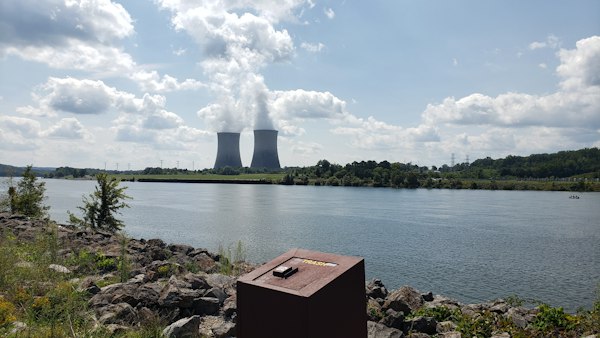
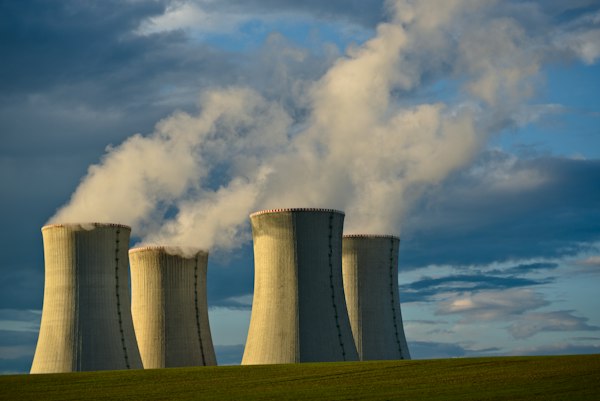
Nuclear power returned to centre stage. The United States set a target of 400 gigawatts by 2050 through executive order, although experts point to costs and build times as the main obstacles and recall that the previous nuclear renaissance faded after Fukushima. TerraPower's Natrium reactor, at 840 MW thermal with molten-salt storage, was the first of its kind to complete the federal environmental review.
AI demand is the engine: Meta partnered with TerraPower and Oklo for about 4 gigawatts, and small modular reactors could be built in three years, against a decade or more for large ones. Critics reply that they are too expensive to compete and that HALEU fuel depends on a Russian-dominated supply chain. In parallel, a Chinese experimental reactor reached a plasma density once considered a limit, a laboratory advance still far from the grid.
Renewables rising, climate policy divided
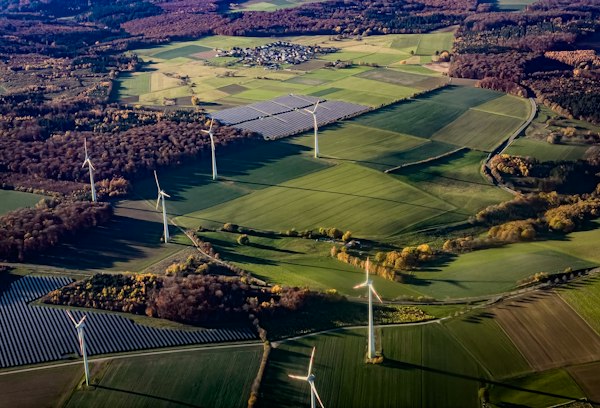
Renewables delivered the best numbers. The fall in panel prices, thanks to Chinese mass production, drove solar in India, Saudi Arabia and South Africa, while in the United States tariffs and policy doubts hold it back. Energy-transition investment was heading for a record, with $386 billion in renewables in the first half of 2025, and the United Kingdom hit 22,711 MW of wind at one moment, 55.7% of its electricity.
Policy was less favourable. The EPA revoked the endangerment finding that underpinned emissions regulation, a decision that more than a dozen organisations took to court and that also removes the requirements for new vehicles. Canada, for its part, agreed with Alberta to relax the oil and gas emissions cap and the clean-electricity rules.
- Boom Solar Global Auge Mundial Declive en EEUU
- Energia Verde 2025 Avances Sorprendentes Contra el Cambio Climatico
- Record Eolico en Reino Unido Energia para Millones
- EPA Revoca Hallazgo Clima Adios a Regulacion Emisiones
- EPA Climate Finding Revoked Thousands Face Avoidable Deaths
- Canada Reduce Normas Climaticas Mas Inversion
Why it matters and what to watch
The EV market splits by segment
Western carmakers are correcting course in luxury and pickups while affordable models and real-world data improve; watch whether the Chinese share in Europe keeps growing.
Electricity is the new bottleneck
Data centres, cars and heat pumps compete for the same grid, and prices already reflect that pressure in some states; the key figure will be how much new supply arrives in time.
Climate policy retreats unevenly
Washington and Ottawa loosen rules while clean-energy investment sets records, so the market advances with less regulatory backing; litigation will decide the real scope.
Nuclear: a promise with costs to prove
Permits advance and tech companies supply demand, but costs and fuel remain unresolved; the first projects under construction will be the test.
What we think
As the chief editor, what stands out to us over these months is how little the headline announcements and the measured evidence have in common. The measured evidence on electric cars, from breakdowns to the air people breathe, is encouraging and deserves more weight than any launch event. The projections for modular reactors, fusion and AI consumption, by contrast, are estimates with wide margins and should be read as such. We are uneasy that climate policy is weakening just as electricity demand grows; no record investment figure offsets that risk on its own. We would rather wait for verifiable results before declaring any single technology the winner, and we would keep the whole system in view rather than the car alone.
Byline, Chief editor · English editionEverything we published on this topic
26 stories from Sep 2025 to Feb 2026, by month. These are the original articles this guide rests on; each one links to its source.