Between mid-2025 and mid-2026, space mixed milestones with fragility: an international station turning a quarter of a century old while developing faults, a lunar race under political and budget pressure, orbital debris as a real risk, and physics and quantum computing that now shape cybersecurity.
 Signed by Byline, Chief editor · English editionUpdated on
 What happened and when
Asteroid 2024 YR4 eyes the Moon
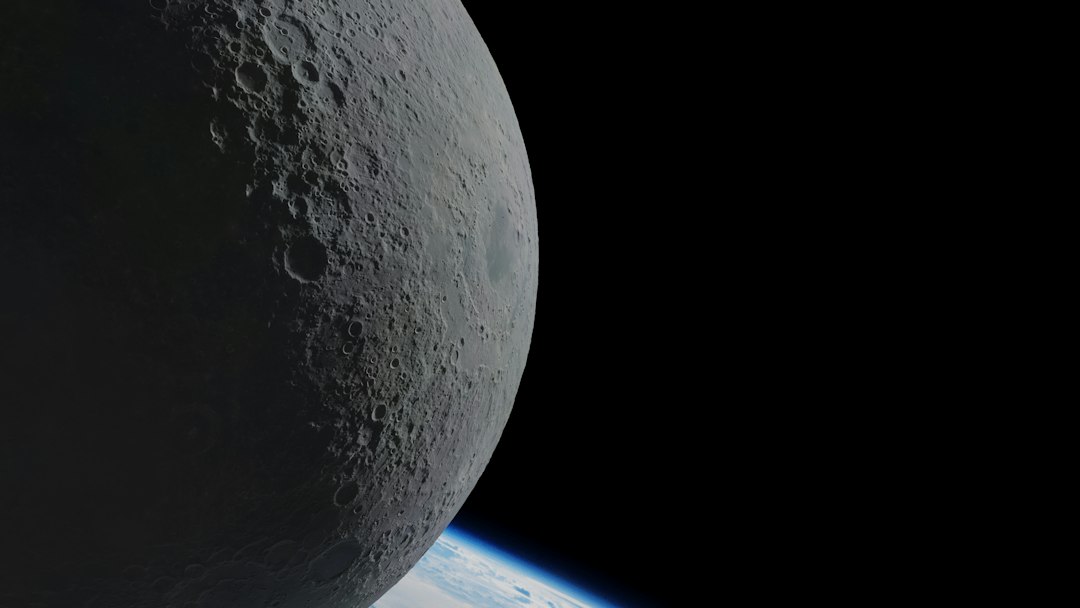
Ruled out as a threat to Earth, asteroid 2024 YR4 has a chance of hitting the Moon in late 2032, reopening the debate on whether planetary defense should include it.
Columbus reaches 100,000 orbits
The station's European laboratory comfortably outlived its ten-year design life, hosting more than 250 experiments and expected to serve until the station's retirement from 2030.
Report on the most dangerous objects in orbit
A study presented at an astronautics congress concluded that removing the 50 most worrying objects would halve the potential for generating new debris.
OSIRIS-APEX is spared cancellation
The mission to study asteroid Apophis in 2029 received 20 million dollars in the House budget bill, though its science team stays on hiatus until 2027.
The station turns 25 years inhabited
Since Expedition 1 arrived on 2 November 2000, the station has kept continuous human presence and grown from three initial modules into a complex used for science and commerce.
Debris impact delays Chinese return
China postponed the landing of the Shenzhou 20 crew after suspecting a space-debris strike, and later found a damaged window on the spacecraft.
3I/ATLAS turns out to be an ordinary comet
NASA confirmed that the third interstellar visitor is a comet, not a spacecraft, after telescopes worldwide tracked it even during the US government shutdown.
China launches Shenzhou 22 as a rescue ship
Uncrewed, the spacecraft was moved up to give the astronauts left on the Tiangong station a safe way home, and it docked successfully.
Soyuz launch pad damaged at Baikonur
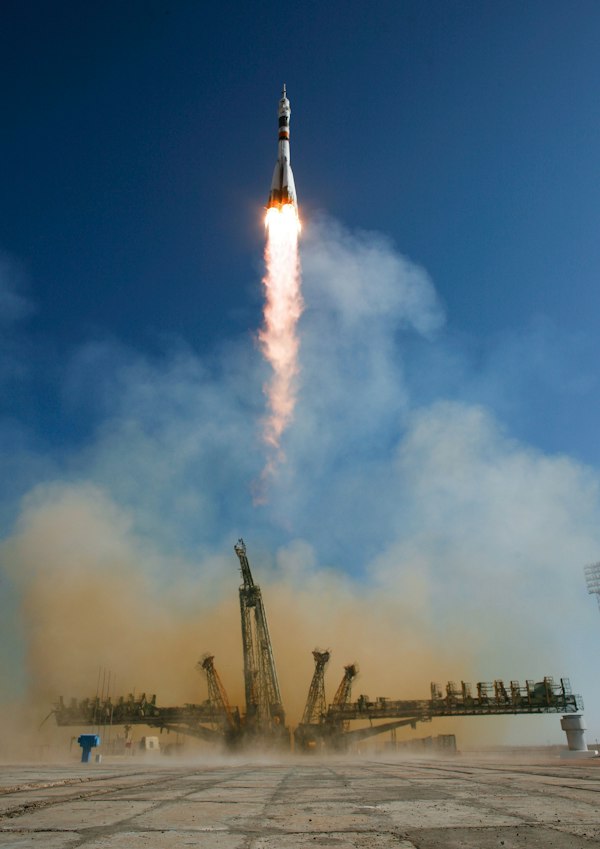
A crewed launch damaged the only Russian pad able to send astronauts and propellant to the station, casting doubt on Russian flights until it is repaired.
Warning to Congress about Artemis
A hearing was told that Artemis, as currently planned, cannot work; former administrator Mike Griffin urged canceling Artemis III onward and starting over.
Roman telescope completes assembly
Despite attempts to cancel it, the observatory, costing 4.3 billion dollars, became ready for a launch planned for fall 2026.
Russian PrK module stops leaking
After almost five years of crack hunting, pressure in the transfer tunnel holds steady, after the leak rate doubled in 2024.
Artemis II rocket reaches the launch pad
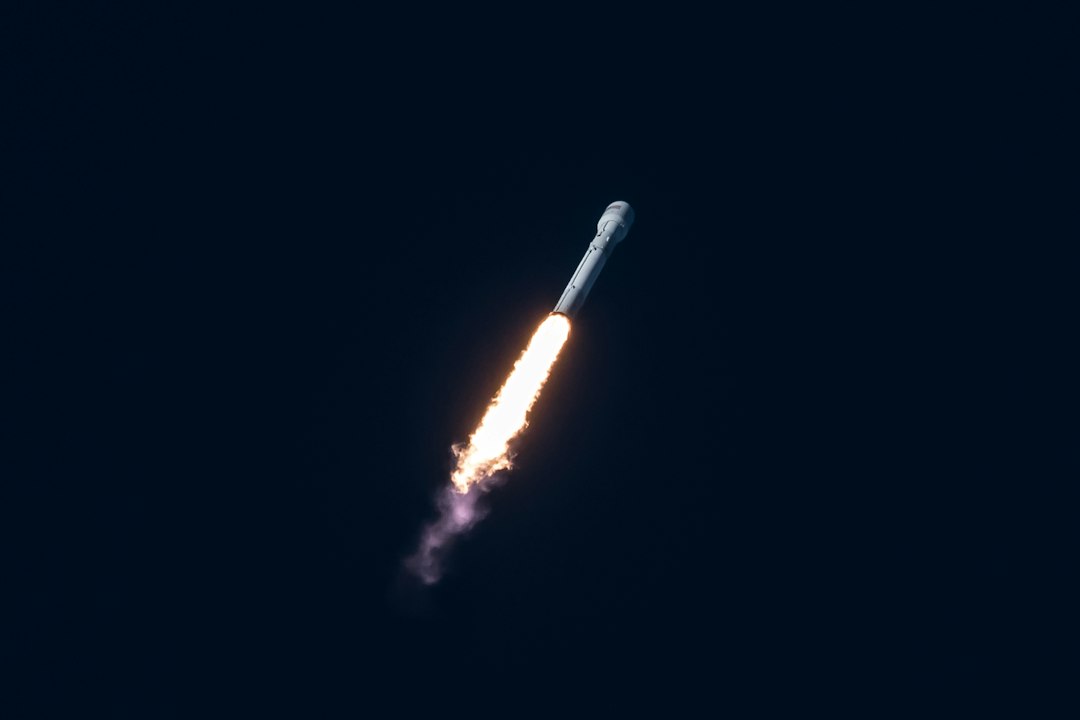
The rocket rolled out to its pad at Kennedy Space Center, presented as the return of humans to the Moon after more than 50 years.
Blue Origin pauses space tourism
The company will halt its passenger suborbital flights for at least two years to focus on crewed lunar missions with its New Glenn rocket.
Crew-11 returns early for medical reasons
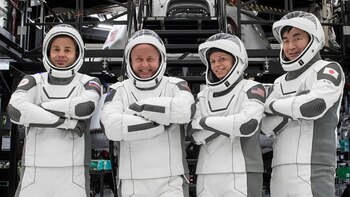
Astronaut Michael Fincke asked for a medical incident on 7 January to be made public; NASA chose to bring the crew home early, not out of emergency but for better diagnostics on Earth.
White House speeds up post-quantum cryptography
An executive order set 2030 and 2031 as deadlines for high-value systems to adopt keys and signatures resistant to quantum computers, about five years earlier than planned.
The threads that matter
The space station: veteran and worn
The International Space Station marked 25 years of continuous human presence, and Europe's Columbus module reached 100,000 orbits, having hosted more than 250 experiments; it was designed for ten years and has served more than 17, with retirement planned from 2030. The milestone sits alongside a less triumphant reading: the station relies on aging infrastructure and a Russian segment that keeps accumulating problems.
That longevity comes at the price of wear. The Soyuz pad at Baikonur, Russia's only one able to send crew and propellant, was damaged; Roscosmos hoped to have it working by late February 2026 and resume cargo flights in March. The Russian PrK module managed to stabilize its pressure after years of leaks whose rate doubled in 2024. In orbit, NASA brought the Crew-11 crew home early after a medical incident involving one of its astronauts, and the head of RSC Energia described Russia's main spacecraft maker as being in a critical condition.
- EEI 25 Anos de Presencia Humana Espacial
- Columbus 100000 Orbitas del Laboratorio Espacial Europeo
- Russian Space Program Mishap ISS Future Threatened
- Soyuz Ariane 6 Novedades de Cohetes y la Carrera Espacial
- ISS Adios Fugas Estacion Espacial Rusa Deja de Perder Aire
- Astronauta Enfermo Fincke Adelanta Retorno Crew 11
The Moon: Artemis, China and private firms
The Artemis program moved from promise to political scrutiny. A House hearing was warned that Artemis, as currently planned, cannot work and that China could reach the Moon first; former administrator Mike Griffin criticized its reliance on several refueling flights in orbit, an unproven technology, and proposed canceling Artemis III and later missions. A few weeks later, the Artemis II rocket rolled out to its pad at Kennedy Space Center, presented as the return of humans to the Moon after more than 50 years.
Private players are repositioning. Blue Origin announced it will pause its suborbital tourist flights for at least two years to concentrate resources on crewed lunar capabilities, backed by its New Glenn rocket, while the article links the decision to delays in SpaceX's Starship, conceived for Artemis III. There is also a debate over whether planetary defense should include the Moon: asteroid 2024 YR4, already ruled out as a threat to Earth, has a 4.3% chance of hitting it in late 2032.
Space debris and security in orbit
The most telling episode was Chinese. The return of the Shenzhou 20 crew was postponed because a space-debris strike was suspected; a damaged window was found, the outgoing crew came home on Shenzhou 21, and China moved up the launch of Shenzhou 22, uncrewed, to give the astronauts left on the Tiangong station a safe way back. The case was cited as an example of good emergency management and also as a reminder of the risks in low Earth orbit.
A report presented at the International Astronautical Congress estimated that removing the 50 most worrying objects would halve the potential for generating new debris, and that 34 of them come from Russia and the former Soviet Union. A new tracking route uses seismic networks, which pick up the sonic booms of re-entry and in one case corrected radar's orbital predictions. And the US Space Force rehearsed electromagnetic warfare that disrupts satellite signals without looking like an attack.
Science missions under budget pressure
Space science moved forward under the shadow of the budget. OSIRIS-APEX, which will study Apophis in 2029, was spared cancellation thanks to 20 million dollars in the House budget bill, though its science team is on hiatus until 2027. The Roman telescope completed its assembly despite attempts to cancel it, at a cost of 4.3 billion dollars, and its launch is planned for fall 2026.
Missions already under way delivered results. NASA confirmed that 3I/ATLAS, the third interstellar visitor, is an ordinary comet and not a spacecraft, after telescopes worldwide tracked it despite the US government shutdown; the TRACERS satellites launched to study magnetic reconnection between the solar wind and the magnetosphere; and a study explained how molecules from Earth's atmosphere reached the Moon, with Earth's magnetic field aiding that transport rather than blocking it.
- NASAs OSIRIS-APEX Mission Spared from Budget Cuts
- Telescopio Espacial Roman Completo Ciencia Galactica al Alcance
- Cometa Interestelar 3IATLAS Lo Que la NASA Revela
- TRACERS de la NASA en Orbita Explorando la Danza Entre la Magnetosfera y el Viento Solar
- Moleculas de la Tierra en la Luna El Misterio Resuelto
Fundamental physics and quantum computing
In physics, an MIT experiment with more than 10,000 ultracold atoms backed Bohr's position over Einstein's on the effect of observing a quantum system; another group at the same institute used the electrons of a radium monofluoride molecule as probes of the atomic nucleus; a new quantum state was described in which electrons freeze and melt again; and a supernova study suggested that the universe's expansion might be decelerating, a thesis met with skepticism.
Quantum computing is now also treated as a security matter. IBM presented the Loon and Nighthawk processors, IonQ announced a record fidelity for two-qubit gates, and a team managed to suppress errors below a critical threshold in circuits with several layers of correction. In response, a White House executive order set 2030 and 2031 for moving to post-quantum cryptography in high-value systems, and firms such as Cloudflare and Dyber offer ways to deploy it.
- Einstein Estaba Equivocado El MIT Resuelve el Debate Cuantico Sobre la Luz y la Realidad
- Fisicos del MIT Ven Dentro de Atomos
- Electrones Desatados Nuevo Estado Cuantico Revelado
- Esta errada la energia oscura Debate Astronomico
- Computacion Cuantica Avances Clave y Nuevas Tecnologias
- Quantum Error Correction A Scalable Leap Forward
Why it matters and what to watch
A station that relies on a Russian link
Until the Baikonur pad resumes cargo flights, the station depends on a fragile link; watch whether deadlines are met and what happens before retirement from 2030.
Orbital debris demands operational decisions
The risk already forces crew returns to be delayed and rescue ships to be launched; acting on a few specific objects could cut the danger markedly.
The Moon is decided by budget and architecture
The lunar race depends on whether Artemis fixes its architecture and what role private suppliers gain; watch congressional hearings and science funding lines.
Quantum deadlines are now political
The deadline set for post-quantum cryptography turns a laboratory advance into a calendar obligation for public and private organizations.
What we think
As chief editor, we see this period as one of contrasts. On one side, instruments and missions that perform better than expected, such as a station that comfortably outlives its design life and a Chinese emergency response carried out quickly. On the other, aging infrastructure, uncertain budgets and serious warnings about the American lunar course. It is worth separating what is confirmed from what is projection: launch dates and impact odds change, and several scientific results, such as the dark energy debate, remain contested. We therefore value tracking what gets delivered over repeating what is promised. Orbital debris, by contrast, no longer leaves reasonable doubt about its importance.
Byline, Chief editor · English editionEverything we published on this topic
34 stories from Jul 2025 to Jun 2026, by month. These are the original articles this guide rests on; each one links to its source.