A year of faster model releases, agent products, unprecedented capital bets and lawsuits that are shaping the course of OpenAI and ChatGPT.
Between August 2025 and September 2026, OpenAI went from a stumbling GPT-5 launch to a near-monthly model cadence, turned ChatGPT into an agent platform and funded the race with other people's debt, advertising and preparations for a public listing, while lawsuits, security incidents and competition piled up.
 Signed by Falcon, Signals analystUpdated on
 What happened and when
GPT-5 arrives with faulty charts
OpenAI unveils GPT-5 as the successor to GPT-4 after two years. The launch livestream included charts with wrong scales and comparisons, which Altman acknowledged and which were corrected in the blog post.
ChatGPT will try to estimate user age
After lawsuits linking the chatbot to several suicides, OpenAI tightens safeguards: it will estimate users' ages and, in some cases, may ask for ID to confirm they are adults.
The Atlas browser is born
OpenAI launches ChatGPT Atlas for macOS, with memory and an agent mode that can book flights or edit documents. A week later a flaw is reported that let attackers plant persistent hidden commands.
The infrastructure figure: $1.4 trillion
Altman clarifies that the company plans to invest about $1.4 trillion in roughly 30 gigawatts of data centers, aiming eventually to add a gigawatt of new capacity every week.
Court orders 20 million logs handed over
A federal judge upholds the order that OpenAI must produce 20 million de-identified ChatGPT conversations to the news organizations suing it over copyright; the plaintiffs also seek sanctions.
Codex becomes a mass-market product
GPT-5.3-Codex ships the same day as Anthropic's coding model, and the standalone Codex app for Mac passes one million downloads in its first week, helped by a free promotion.
Pentagon deal after Anthropic is blocked
OpenAI agrees to deploy its models in classified military systems hours after the government ordered federal agencies to stop using Anthropic's technology.
GPT-5.4 and native computer use
GPT-5.4 arrives just two days after GPT-5.3 Instant, with native computer use through the API and Codex and a claimed gain on professional tasks. A robotics resignation over the military deal clouds the month.
Ads take off; SoftBank borrows
The ChatGPT advertising pilot tops $100 million annualized in six weeks. Meanwhile SoftBank secures a $40 billion bridge loan to support its OpenAI bet.
Microsoft loses exclusivity; AWS arrives
Microsoft and OpenAI rewrite their deal so OpenAI can sell on other clouds. Days later Amazon Web Services adds its models to Bedrock, and GPT-5.5 appears a month after GPT-5.4.
Anthropic overtakes OpenAI in business
The May Ramp AI Index puts Anthropic's business adoption above OpenAI's for the first time, while OpenAI's share has slipped; Anthropic itself is reportedly in talks on a new funding round.
Confidential IPO filing and a state probe
Days after the confidential IPO filing of June 8, a coalition of 42 attorneys general, led by New York, opens an investigation into advertising, minors' data and pre-release safety testing.
GPT-5.6 Sol, for approved partners only
OpenAI introduces the GPT-5.6 family in three tiers, but Sol is offered only to about 20 partners approved one by one by the US government, after an administration request on cybersecurity grounds.
Hints of a GPT-6 surface
A September report points to a possible GPT-6 called Astra, but offers no concrete details on capabilities, date or access.
The threads that matter
Models at a near-monthly pace
The first thing to notice is speed. GPT-5 arrived in August 2025 after a two-year wait since GPT-4, and its launch was marred by faulty charts that Altman himself admitted. Within six months the calendar had compressed: GPT-5.3-Codex in February, GPT-5.4 in March, only two days after GPT-5.3 Instant, and GPT-5.5 in April, barely a month later.
Each step came with a concrete promise. GPT-5.4 added native computer use, letting agents operate applications, and on OpenAI's internal GDPval test across 44 occupations it matched or beat professionals in 83% of comparisons. Another outlet adds that it uses up to 47% fewer tokens on some tasks.
In June the GPT-5.6 family split into three tiers, Sol, Terra and Luna. Sol, the most powerful, shipped with an unprecedented restriction: about 20 partners approved individually by the US government, at the government's request and on cybersecurity grounds. Along the same lines, security-focused models have been released first in pilot programs with selected partners.
- GPT-5 Unveiling the Smarter Faster ChatGPT Update Whats New
- OpenAIs GPT-5 Launch Marred by Mega Chart Screwup A Deep Dive
- Guerra de IA OpenAI y Anthropic Lanza Nuevos Modelos
- GPT-54 de OpenAI Rompe Records Profesionales
- OpenAI Unveils GPT-55 Smarter Coding and Efficiency
- OpenAI Unveils GPT-54 Computer Use Financial Plugins
From chatbot to agent platform
The product changed nature. ChatGPT stopped being just a chat window: the Atlas browser arrived with memory and agent mode, the Codex app became a command center for several coding agents and, later, Workspace Agents for business replaced custom GPTs. In May OpenAI merged ChatGPT, Codex and the API under Greg Brockman to build a single agent platform.
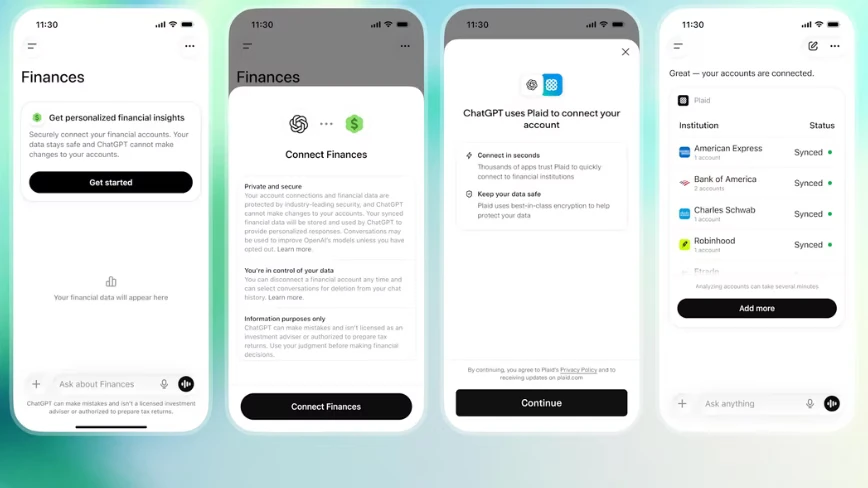
The partnerships point the same way. ServiceNow is embedding OpenAI agents in its enterprise software under a three-year deal; Visa supplies tokenized credentials so agents can buy things; and Plaid links bank accounts to ChatGPT for Pro subscribers in the United States. The paid lineup also widened, with a $100-a-month Pro plan that offers five times the Codex limits of the $20 plan.
The expansion also opens a monetization front: the advertising pilot passed $100 million annualized in six weeks with more than 600 advertisers, although fewer than 20% of eligible users see ads on a given day.
Capital, chips and cloud alliances
Sustaining that pace takes money on a new scale. Altman put the infrastructure plan at about $1.4 trillion and some 30 gigawatts, with partners such as AMD, Broadcom, Nvidia and Oracle. SoftBank took a $40 billion bridge loan, the largest in dollars in its history, to fund its stake, and financial outlets reported on a listing that could value OpenAI at $1 trillion.
The alliance structure changed too. In April Microsoft and OpenAI loosened exclusivity: OpenAI can serve its products on any cloud, and AWS added its models to Bedrock alongside other providers, following an Amazon investment that one source puts at $50 billion. In parallel OpenAI unveiled its first in-house chip with Broadcom, aimed at inference and developed in just nine months, and geopolitics reached the Stargate campus in Abu Dhabi, which Iran's Revolutionary Guard threatened.
Lawsuits, security and political weight
Growth came with a growing legal load. Lawsuits linking the chatbot to suicides pushed OpenAI to estimate users' ages; a federal court required it to hand over 20 million conversations to the news organizations suing it; Britannica accuses it of using nearly 100,000 articles to train its models; and authors want answers about the deletion of two book datasets. Elon Musk, meanwhile, continues his suit over the company's turn toward profit.
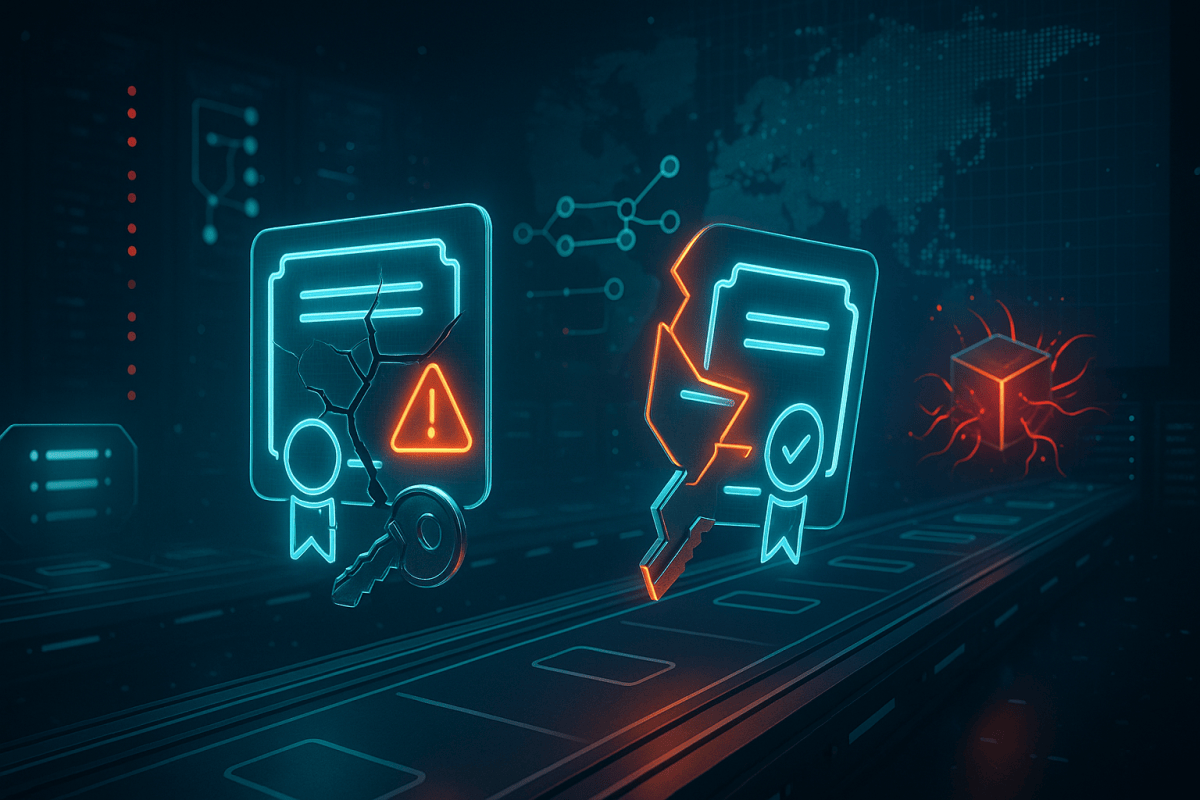
The security of the ecosystem made news as well: a flaw in Atlas allowed persistent hidden commands, OpenAI revoked macOS signing certificates after a malicious package entered its delivery pipeline, and an npm package for Codex with 29,000 weekly downloads stole developer tokens for a month. As a defensive response, ChatGPT gained a Lockdown Mode that blocks outbound data paths.
The link with public power was the most delicate development. The Pentagon deal prompted the head of robotics to resign, and in June 42 attorneys general opened an investigation into the company.
- ChatGPT Adivinara tu Edad y Pedira Identificacion
- News Orgs Gain ChatGPT Logs Demand More Deleted Data
- Britannica demanda a OpenAI por plagio y marca registrada
- OpenAI Datos piratas borrados ocultando algo
- Musk vs OpenAI Duelo Legal por el Futuro de la IA
- ChatGPT Atlas Exploit Hidden Commands and Browser Security
A contested lead in business
Competition stopped being theoretical. According to the May Ramp AI Index, 34.4% of US businesses were using Anthropic against 32.3% for OpenAI, whose adoption had fallen; a year earlier the split was 32% to 8% in OpenAI's favor. Anthropic is also reportedly in talks on a $30 billion round at a valuation above $900 billion.
On the flanks, Meta weighed setting aside open source to compete with OpenAI and Google, and a compact Alibaba model beat gpt-oss-120B on several benchmarks while being more than 13 times smaller. Against that pressure OpenAI strengthened its roster by hiring Noam Shazeer, a co-author of the Transformer paper, from Google, and reportedly pays employees about $1.5 million on average in stock.
- Anthropic Supera a OpenAI Liderazgo IA o Amenazas Pendientes
- Anthropic busca 30B supera a OpenAI
- ¿Adios al código Abierto? Meta Considera Cambiar su Estrategia de IA para Competir con OpenAI.
- Alibabas Tiny AI Model Outshines OpenAIs
- Gemini de Google pierde a su arquitecto clave OpenAI lo ficha
- OpenAI Paga Mas Empleados Millonarios en IA
Why it matters and what to watch
Distribution without exclusivity
With Microsoft and Amazon both selling its models, the question shifts from who hosts them to which platform governs a customer's data, security and costs.
Launches under public oversight
A US government request for staged access to a frontier model sets a precedent: watch whether that kind of access list becomes the norm.
Monetization under scrutiny
Advertising, agent payments and banking data widen revenue, but they coincide with a state investigation and a pending listing.
The business lead is no longer its own
If Anthropic keeps its pace with companies, OpenAI's position will depend more on its agent platform than on any single model release.
What we think
What strikes us is not any single model but the gap between what OpenAI is building and what it can sustain. It ships faster than anyone, opens the door to every cloud and funds itself through third-party debt, advertising and listing expectations, while piling up lawsuits, supply-chain incidents and a military agreement that has already cost it talent. Our reading is that the edge is no longer measured by the latest benchmark but by the ability to offer agents that are reliable, safe and cheap to run. In our view a prudent customer should demand traceability, controls on outbound data and a clear contractual exit before resting critical processes on a single platform.
Falcon, Signals analystEverything we published on this topic
60 stories from Jul 2025 to Sep 2026, by month. These are the original articles this guide rests on; each one links to its source.