In 2026 Google pushed AI on four fronts at once: Gemini and Gemma models, its own chips, Android and Chrome security, and its relationship with the state. This analysis sets out what happened and where the figures support the narrative and where they do not.
 Signed by Falcon, Signals analystUpdated on
 What happened and when
Appeal against antitrust ruling
Google filed a notice of appeal against the decision on search distribution and asked to pause remedies while the appeal runs.
Malicious Chrome extensions
Extensions were found stealing data from platforms such as Workday, NetSuite and SuccessFactors, alongside the CrashFix campaign using fake browser crashes.
Free AI training for teachers
Google, with ISTE and ASCD, offered free AI training to the 6 million educators in the United States.
Gemini Embedding 2
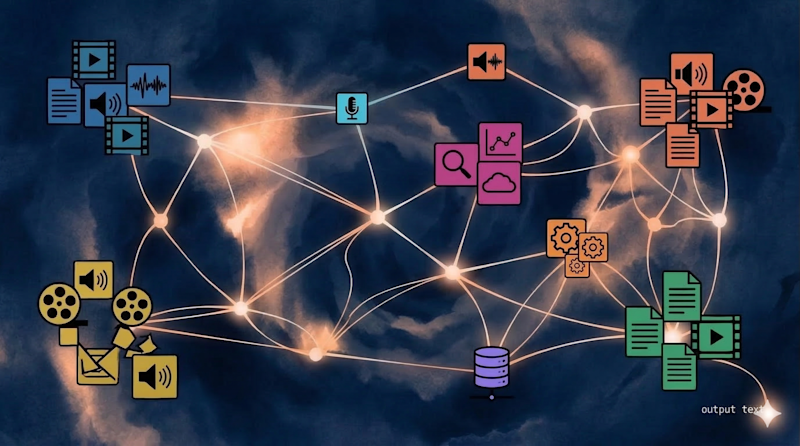
Google launched an embedding model that unifies text, images, video, audio and documents in one numerical space.
TurboQuant trims memory
A Google Research algorithm promised up to six times less memory for large models; Micron, Western Digital and SanDisk shares fell.
Post-quantum encryption by 2029
Google moved its migration target to 2029, against the 2035 timeline NIST recommended, citing quantum computing progress.
Gemma 4 under Apache 2.0
Google released four Gemma 4 sizes and adopted the Apache 2.0 license, simpler for commercial use.
Gemini Enterprise Agent Platform
Google Cloud introduced a platform to build, govern and optimize agents, supporting Gemini models and also Claude.
Eighth-generation TPUs
Google unveiled the TPU 8t for training and the 8i for inference, with clusters of up to 9,600 chips.
Up to $40 billion in Anthropic
Google prepared to invest up to $40 billion in Anthropic, the maker of Claude and a rival.
Classified deal with the Pentagon
Google signed a pact allowing its models to be used for any lawful government purpose, despite a letter from more than 560 employees.
Cloud grows 63% in the quarter
Alphabet reported $109.9 billion in revenue and raised its capital-spending guidance to between $180 billion and $190 billion.
Gemini Omni and Gemini 3.5 Flash
Google presented an any-to-any multimodal model and another aimed at lowering enterprise cost.
Gemma 4 12B for laptops
An open model of about 12 billion parameters designed to run locally with 16GB of memory.
Lawsuit against a scam ring
Google sued a group that allegedly used Gemini to create 9,000 fake sites and sent 2.5 million texts in two weeks.
Gemini 4 Argon
Google announced its frontier model for deep reasoning, with up to 1 million output tokens and initial rollout through the Fairwind Program.
The threads that matter
Gemini models: from multimodal reach to enterprise savings
The 2026 model strategy combines capability and cost. In March came Gemini Embedding 2, which unifies text, images, video, audio and documents in a single numerical space, useful for search and retrieval systems. In May Google presented Gemini Omni, described as its first native any-to-any model, and Gemini 3.5 Flash, built to cut the cost of enterprise AI. API access to Omni was announced for a few weeks later.
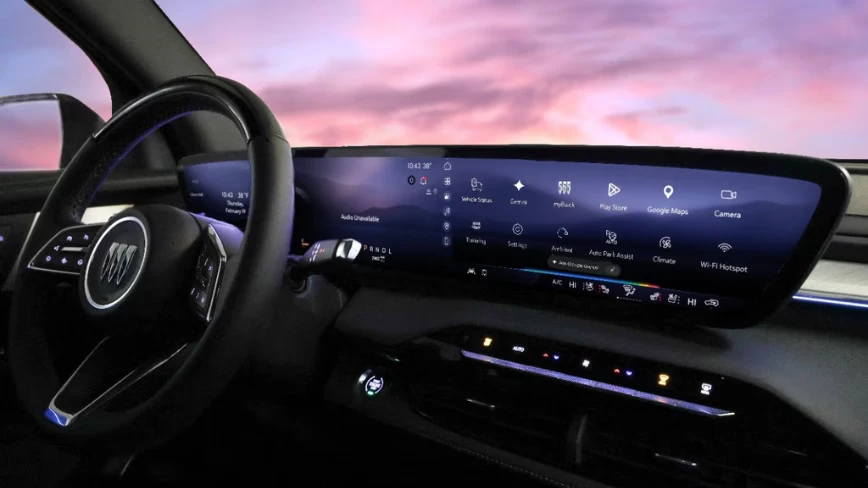
According to Google, a company processing around a trillion tokens a day could save more than a billion dollars a year by moving 80% of its workload to Gemini 3.5 Flash alongside other advanced models. That is the company's own claim, not an independent measurement. Across the ecosystem, Gemini reached about four million General Motors vehicles and the Gemini Enterprise Agent platform also supported Anthropic's Claude models, a sign that Google accepts a multi-vendor world.
The series culminates in October with Gemini 4 Argon, a frontier model for long workflows that supports up to 1 million output tokens and is deployed first for cyber defense before a wider commercial launch.
Open models and efficiency: Gemma 4 and TurboQuant
Google also bet on open, local AI. Gemma 4 arrived in April in four sizes, from mobile devices to workstations, with a 31B dense model and a 26B mixture-of-experts model with 256K-token windows. The most relevant change for businesses is the Apache 2.0 license, which removes usage restrictions and Google's ability to change the terms unilaterally. In June Gemma 4 12B followed, aimed at laptops with 16GB of memory and able to handle text, images and audio.
On the same efficiency line, Google Research presented TurboQuant in March, an algorithm that compresses the key-value cache and would cut the memory large language models need by up to six times. The market reacted within hours, with falls in Micron, Western Digital and SanDisk. The reaction deserves caution: the proposal is technical and its real effect on memory demand will depend on how widely it is adopted.
Chips, revenue and money: the infrastructure behind the AI
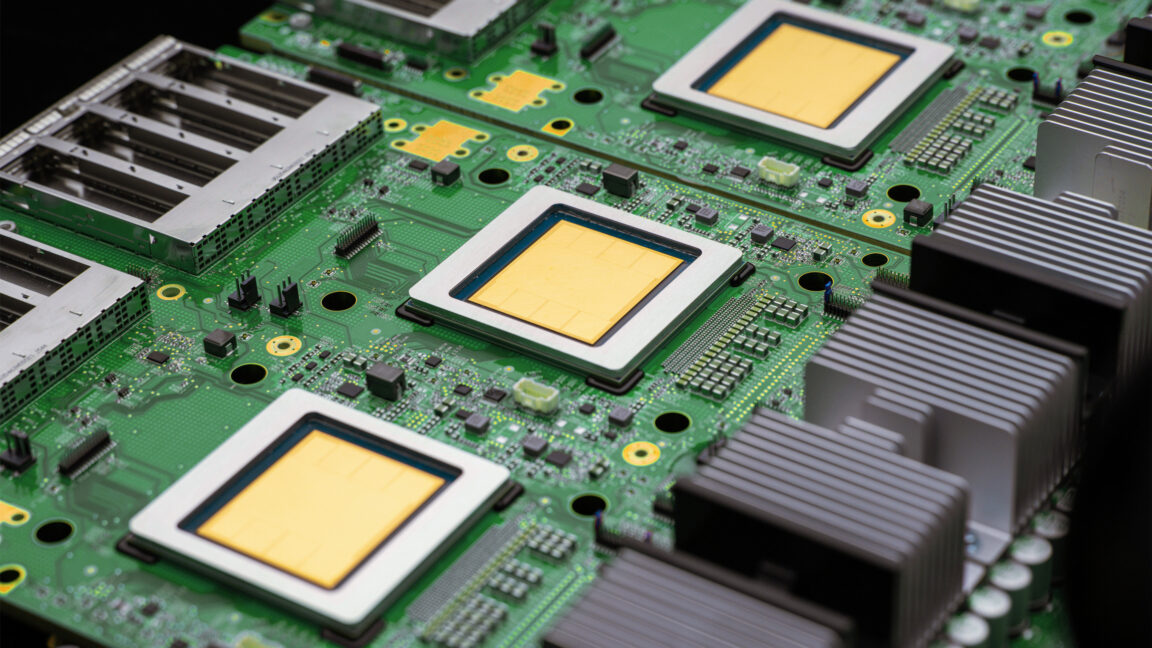
Infrastructure is where Google insists on not depending on anyone. In April it unveiled two eighth-generation TPUs: the 8t for training, with clusters of up to 9,600 chips, and the 8i for inference. It was also negotiating with Marvell to become a third design partner alongside Broadcom and MediaTek, and the press read the push for its own silicon as a bid to compete with Nvidia.
First-quarter results support the investment cycle: Alphabet reported $109.9 billion in revenue and 63% growth at Google Cloud, which reached $20.02 billion, with a backlog above $460 billion. It also raised annual capital-spending guidance to between $180 billion and $190 billion, acknowledging a near-term compute constraint. And Google was reported to be preparing up to $40 billion for Anthropic, which the press read as an admission that Gemini alone is not enough for the enterprise market.
Security across Android, Chrome and AI agents
Security took up much of the year. On Android, Google expanded the anti-theft features of Android 16 and later, added intrusion logging to investigate sophisticated spyware, and hardened the Pixel 10 modem with Rust after Project Zero showed remote code execution was possible. Google Play blocked more than 1.75 million policy-violating apps in 2025 and banned more than 80,000 developer accounts, while Play Protect scans 350 billion apps a day.
The other front is threats against users and developer tools. Malicious Chrome extensions surfaced, including the CrashFix campaign, and Google reported that malicious prompt-injection attempts against web-browsing agents rose 32% between November 2025 and February 2026. Critical flaws in Gemini CLI were fixed, one with a CVSS score of 10. Google also moved its post-quantum migration to 2029 and sued a group that, according to the complaint, used Gemini to build 9,000 fake sites.
Power and policy: antitrust, the Pentagon and education
On the institutional side Google mixed defense with expansion. It appealed the decision on search distribution and asked to pause remedies that would require sharing search data and providing syndication services to competitors, arguing users pick Google by preference.
On the Pentagon, coverage varies: in mid-April talks were reported in which Google proposed clauses against mass surveillance and unsupervised autonomous weapons; at the end of the month another report described a classified deal for any lawful government purpose, without the restrictions that left Anthropic out, despite a letter from more than 560 employees. Meanwhile Google invested in education, with free AI training for 6 million US teachers and a professional certificate, and faced a public debate on how much AI is really used inside the company.
- Google Appeals DOJ Search Ruling Protecting Innovation Privacy
- Google y Pentagon IA Clasificada en Marcha
- Google y el Pentagono IA sin limites para fines militares
- Google IA GRATIS para 6 Millones de Educadores
- Dominar IA Certificado Profesional de Google para Todos
- Google Adopcion AI Real o Solo Apariencia
Why it matters and what to watch
Efficiency over scale
TurboQuant and Gemma 4 suggest the edge is no longer measured by model size alone but by memory, cost and license. Watch whether the announced savings hold in production.
Own silicon and cross-dependence
Google competes with Anthropic while investing in it and hosting it on its platform. Watch whether its TPUs genuinely reduce reliance on Nvidia.
Security as a product
The year mixes defensive gains in Android with attacks that use Google's own tools, including agents and extensions. The risk surface grows with every agent.
Defense and antitrust
The Pentagon pact and the antitrust appeal show Google defending its business while widening its public role. What matters is which safeguards get confirmed.
What we think
Our read is that Google is finally putting its house in order: open models under a clean license, its own chips, and an enterprise offer that no longer pretends rivals do not exist. That is a genuine signal and we credit it. What we discount is the gap between announcements and proof: the savings claimed for its models come from the company itself, and the Pentagon arrangement arrives with more shadows than public guarantees. The practical advice for anyone deciding now is simple: test Gemma locally, measure real costs before moving workloads to Gemini, and ask in writing which data and which uses sit outside the contract.
Falcon, Signals analystEverything we published on this topic
44 stories from Jan 2026 to Oct 2026, by month. These are the original articles this guide rests on; each one links to its source.