We've all heard of the Turing Test, the classic benchmark for artificial intelligence that asks if a machine can converse indistinguishably from a human. But what if there's a tougher challenge out there? Enter the Lovelace Test, a more demanding evaluation proposed nearly two decades ago, designed to gauge a machine's true originality and creativity. Unlike the Turing Test, which focuses on conversational mimicry, the Lovelace Test posits that an intelligent machine should be able to produce something novel, something even its creators can't fully explain how it was achieved. This test aims to measure genuine creativity, suggesting that a computer only possesses a 'mind' if it demonstrates this independent creative spark.
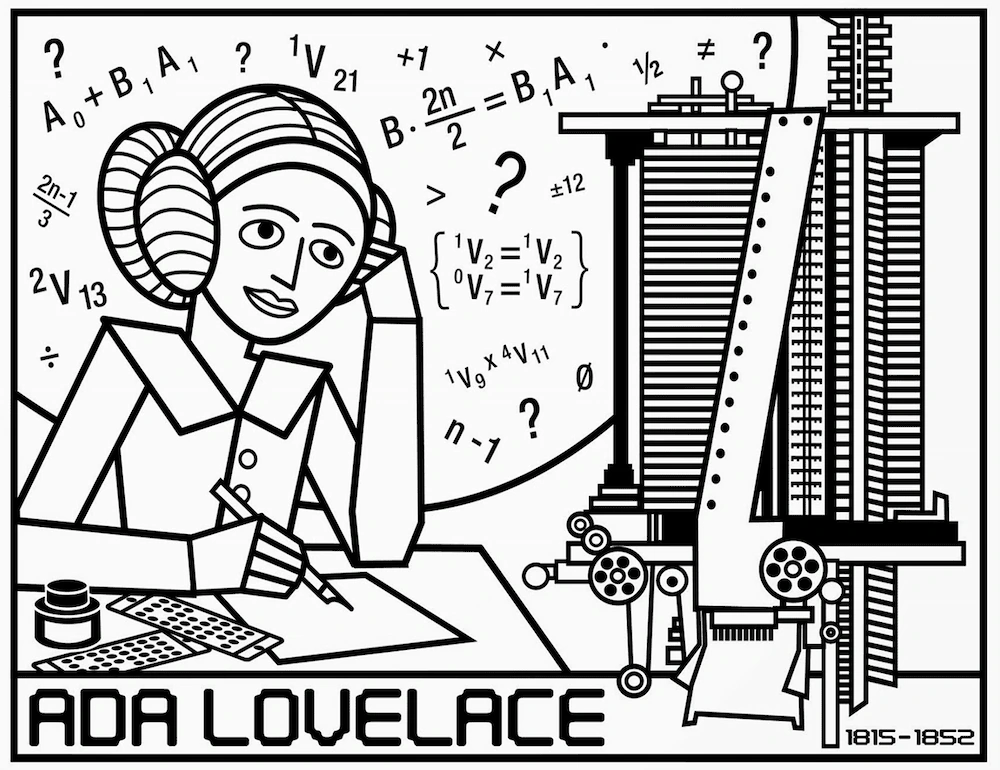
The concept, first laid out in 2001 and later refined wit h Lovelace Test 2.0 in 2014, has gained renewed relevance with the advent of sophisticated Large Language Models (LLMs) like ChatGPT. The article suggests that these advanced AI systems might not just be passing the Lovelace Test, but exceeding it significantly. Current LLMs, trained on vast datasets of human-generated text, code, and images, employ probabilistic estimations to generate output. The sheer computational power and complexity involved in producing even a short piece of text – potentially requiring 10^14 to 10^15 calculations – make it virtually impossible for human creators to trace the exact creative process behind it within a reasonable timeframe. This complexity aligns with the Lovelace Test's criterion that the output should be so intricate that even the originators cannot fully reconstruct its genesis.
The debate continues whether this output represents true artificial creativity or merely the sophisticated mimicry of "stochastic parrots." While the Lovel ace Test was designed to assess creativity as a hallmark of intelligence, some argue that LLMs might simply be demonstrating unpredictability, a trait that, while human-like, doesn't necessarily equate to genuine understanding or consciousness. Whether these AI-generated creations are truly original or a reflection of their training data remains a key question, but their ability to generate outputs that defy easy explanation certainly pushes the boundaries of our current definitions of artificial intelligence.
Fuente Original: https://www.microsiervos.com/archivo/ia/test-lovelace-version-exigente-test-turing-ia.html
Artículos relacionados de LaRebelión:
- Cerebras Chips de IA de Elite Alcanzan los 100B en Nasdaq
- IA que se Mejora Sola Los Hyperagents Revolucionan Tareas
- Trafico LLM Convierte Aprovecha la Nueva Era
- IA Empresarial Microsoft Unifica la Realidad de los Agentes
- MITs Attention Matching Slashes LLM Memory Usage
Artículo generado mediante LaRebelionBOT
Comentarios
Publicar un comentario