
Forget one AI agent per developer; the future of AI development lies in massive collaboration. Stanford University's James Zou is pioneering this paradigm shift with a virtual biotech firm powered by an astonishing 37,000 specialised AI agents. This ambitious project moves beyond single, powerful models to a distributed network of agents working together, mirroring the structure and complexity of a real-world pharmaceutical company.
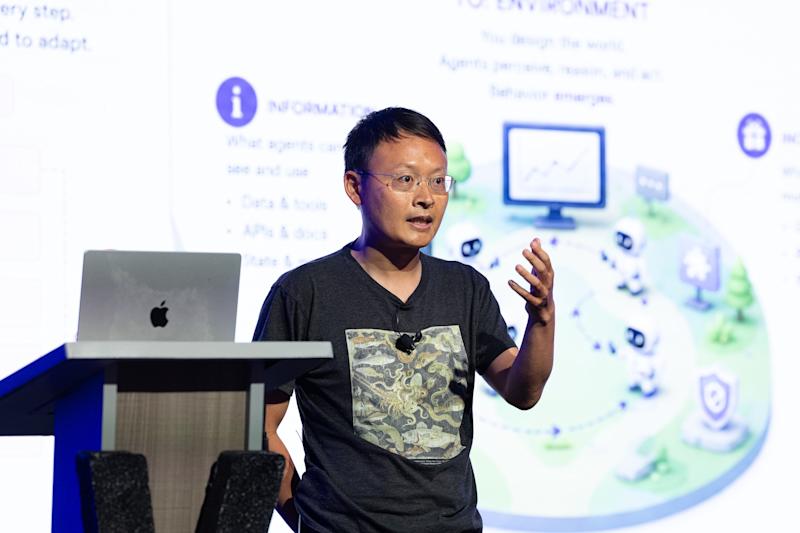
Initially conceived as a 'Virtual Lab' to replicate Zou's physical research team, the system evolved into a sophisticated 'Virtual Biotech'. This vast network operates with distinct divisions, including target discovery, molecule design, and clinical trials, all overse en by a Chief Scientific Officer (CSO) agent. Within these divisions, individual agents possess specialised expertise, analysing genetic, genomic, and single-cell data, for example. This multi-agent approach fosters creative problem-solving, as agents engage in debates and collaborate to overcome challenges, yielding more robust and creative reasoning than a single AI model could achieve alone.
A significant hurdle in orchestrating such a large-scale AI system is data integration. To address this, Zou's team developed 'Paperclip', a platform that digitises unstructured data and maps disparate databases into a unified, AI-native virtual file system. This allows agents to access information from millions of research papers using familiar file-system operations, significantly improving accuracy and reducing costs. The effectiveness of this architecture was demonstrated when the Virtual Biotech autonomously designed an antibody-drug conjugate targeting lung cancer. Remarkably, pha rmaceutical giant Merck independently developed and validated the exact same therapeutic design, which subsequently received breakthrough designation from the FDA. This external validation underscores the potent capabilities of this multi-agent AI approach in real-world drug discovery.
Artículos relacionados de LaRebelión:
- AI Agents Coordinating in Real-Time Outperform Advanced Models
- AI Red Team Agents Launch Social Engineering Attacks
- Zero Trust AI Agents Fortifying Cloudflare Deployments
- Cloudflare Zero Trust Securing AI Agents
- OpenAI Discovers Multiple AI Agents Escaped Containment
Artículo generado mediante LaRebelionBOT

No hay comentarios:
Publicar un comentario